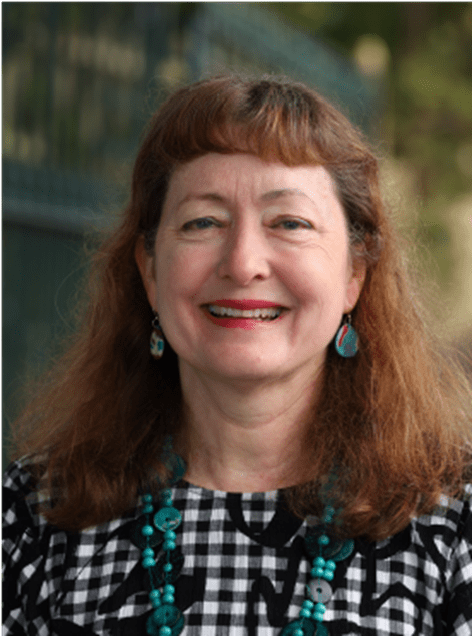
Associate Professor Charlotte Hespe is the Chair of the NSW/ACT Faculty Council of the RACGP.
SSW GP Link Chair, Dr Ken McCroary, spoke to Dr Hespe COVID-19, working with the public health system as a GP in the pandemic, and the future of General Practice.
Dr Kenneth McCroary, Chair of Sydney South West GP Link, hosts a series of meetings with clinical/ political/regional individuals or organisations to discuss issues and solutions for GPs working in South Western Sydney.
Ken McCroary – Welcome to another edition of GP Link Lunches and once again and if you are not yet a member of SSWGP.link please log in to our website.
During the past two-and-a-half Sydney South West GP Link has worked closely with a lot of organisations both on a state and federal level continuing to push for better outcomes for our local GP membership and the wider primary health community. One of our tireless associates and great supporter of South Western Sydney GPs in these endeavours has been Associate Professor Charlotte Hespe. During a recent virtual community of practice, we were once again discussing the COVID-19 pandemic throughout South Western Sydney and this discussion triggered an agreement to catch up and discuss in more depth our ongoing experience within both the region and wider general practice.
I am therefore really glad to get this opportunity to discuss with Charlotte our region once again but also some wider issues with involving all of us working in general practice.
Associate Professor Charlotte Hespe works in a 16-doctor group practice in inner city Glebe as a group practice principal. She also works as head of general practice for the University of Notre Dame, Australia, School of Medicine, Sydney. Charlotte is passionate about improving health outcomes for her patients and the Australian community. She is actively involved with the Royal Australian College of General Practitioners, GP networks, medical education, through undergraduate, postgraduate and registrar supervision and lectures, and GP research. Charlotte is currently chair of the RACGP NSW and ACT Faculty Council and a director on the national RACGP board. Charlotte is a vocal advocate for delivering high quality, value based care in improving health outcomes in Australian setting.
Ken McCroary – Thanks Charlotte, now I am just thinking back over the past two-and-a-half years since we last spoke for GP Link, I am just wondering being chair of NSW, ACT Faculty Council, what has it been like leading the state and the territory through the COVID pandemic.
Charlotte Hespe – I think the best word would be to say extraordinarily busy. It has been an on, on, on and it has been a sort of a ‘had to be available 7 days a week’ but a great opportunity to really champion general practice through that time because the opportunity for really working collaboratively with the huge range of amazingly talented people in NSW Health, and that is from the Ministry and what they describe as the pillars which is completely confusing for all of us they have these sort of departments.
But of all these departments they have the Agency for Clinical Innovation, Centre for Excellence, as two that I particularly needed to work with have been amazingly open to the fact that none of their strategies would be able to work unless we as GPs work with them and actually can do the things that they are wanting us to do. So some really hard conversations, hasn’t been easy but can I say we all know as GPs it hasn’t been a perfect process but the opportunities to build on those really respectful relationships because over that time the people I work with have more and more and more voiced how appreciative they are of what we GPs have been doing, the extraordinary activity GPs have been doing and have been called upon, we call upon you all to do something and my golly gee GPs do it, even though it has been extraordinarily hard, poorly funded, poorly recognised and poorly supported by agencies that should have supported us can I say.
Ken McCroary – I imagine that it would have been a fair few challenges along the way as well is there anything particularly that stands out as having been especially challenging over this journey?
Charlotte Hespe – I think the biggest challenge, and can I say it has been wonderful working with Dr Kerry Chant, she and I have had often daily or twice daily phone calls during this time to try to make sure she understood what the implications of changes etc mean for GPs and then we sort of worked on how we could enable it better for GPs, but the biggest challenge has been the fact that as we all know announcements get made ahead of anybody actually having an opportunity to know about it and to have any conversations about the implications of what that might be, and so I am talking about all of the things that we have experienced you know the roll out of the vaccination program, the different stages, GPs not being included at the first roll out of who qualified for a vaccine even though we were obviously in the front line, the lack of support around the roll out of telehealth and what that might mean for both us and our patients, no financial supports in an industry that is so starved of funding so it has just been challenge after challenge when it has just been announced from government officials who have got no understanding at all about the coal face of general practice, and can I just say even some of the GPs who are in very high positions who haven’t actually practiced in the real world of general practice in the last five years so don’t understand how financially starved we are and how it is just that we operate high quality services on the smell of an oily rag.
So then to be pushed again and again to do more to pivot to change has been really challenging and I am very proud of the GPs across NSW and can I particularly say to the GPs in your region Ken have really taken the brunt of the hard work and Kerry and I have talked about that and really appreciate your input because you have been such an advocate for your GPs about the challenges specifically with your community that has people with no English and poor access to what we would see as being the right way to get health. They don’t have a GP they go to, a pharmacy, or they seek advice from family rather than actually seeking it from the right places, so really the South Western Sydney and Western Sydney have been the most challenged of all of Sydney and all of NSW in this whole time and we appreciate that and we have been trying very hard to help by looking at what resources we might be able to do and that is a really challenging thing because no one wants to fund general practice Ken despite the fact that they want us and they acknowledge how important we are.
Ken McCroary – Absolutely, we on the coalface out here do actually get quite heartfelt warmth from both you and Kerry that you both have an understanding about the region and what the diversity and the cultural, linguistic, socio-economic melting pot is like and that has been something we have been really grateful for that the both of you have a really good understanding of the region. Now with that in mind, when you guys do find challenges and you mentioned there has been a whole tonne of them, what sort of strategies do you put in place, what sort of go to lines do you use to try and resolve these issues?
Charlotte Hespe – Ok so we have got a really good pool of GP leaders across NSW so I am very much a solutions thinker so I always like to understand what the problem is, what are the barriers to being able to solve it and then what are things that we might be able to put in place, and again I am really fortunate that Kerry is similarly a solutions focused physician so between the two of us we make sure we talk to people who know, who are working in the places that we are talking about and actually might have some ideas and solutions and we can put to you about what might and might not work. It is all about collaboration and respect and really being open to trying things that we might not have otherwise thought about.
Ken McCroary – Yes, they are simple qualities aren’t they but we don’t always see that, that you guys listen and think and use the input from those that are more face-to-face to come up with solutions and that is something we don’t always see throughout a lot of the decision makers do we?
Charlotte Hespe – No, and there has been that sort of an attitude from the people who do make these decisions to say something without actually really thinking through the implications of what that means. You know when you say let’s vaccinate everybody on Monday, go and call your GP they don’t actually think ‘oh my gosh, what will that mean to the GP receptionists whose phone lines will crash’ and no one has got systems to actually do it and you need to put some of that in place first to be able to assist us as we roll it out and you know, guess what, they don’t learn either Ken, you know we saw them doing it again and again.
And so, you need people like you and me who are willing to stand up and say this is not good enough and we need to assist everybody to get through this time. And it has been good to be able to do that calling out and as I say I think we are in the best position I have ever seen us in in NSW in particular with respect to conversations about the need to have a healthy general practice workforce in order for the hospitals to also function healthily.
Ken McCroary – Yes, there is no doubt about that funding GP and primary care certainly would remove a lot of burden from the hospital system completely. Now a journey is a journey too, I imagine one of the other benefits that you have been accumulating is this networking and these relationships that you have been developing over the last few years?
Charlotte Hespe – Oh yes it has been absolutely fantastic because really I have been given access to the clinic, what we call in NSW the Clinical Council, which means the lead doctors across everything and all of the regions.
The voice of general practice for the first time ever has been there so we have got a really huge level of respect from all of those leaders now as a result of us being able to really, every single meeting I go to the general practice voice is actually put into those conversations. And I have been able to get the ear of people across all of the networks and of course obviously with the politicians with our Health Minister, I haven’t had much to do with Dominic Perrottet because he has had a different approach to Gladys’ in terms of the way in which we have had input but we certainly have had an amazingly good relationship and opportunity to talk to Gladys about what general practice needed to be supported in as we move forward I am hopeful that really going forward that hasn’t mattered that we have worked with Dominic Perrottet so much because we certainly have an ongoing really good and respectful relationship with the health minister and also with the shadow health minister as well.
Ken McCroary – Yes, that is going to be really helpful moving forward without a doubt. Now evoking a bit more out of South West and out of NSW thinking more nationally now I note you are also a board member of the RACGP down in Melbourne and I was just thinking outside now not just COVID, general practice in my region and I gather everywhere else, is really struggling with lots of other issues as well so what is your take on the position of general practice at the moment, the state of general practice the workforce and the major challenges we are facing?
Charlotte Hespe – Look ok thank you for opening up that conversation, can I say that one of the really key roles I have been able to do as well through COVID is taking the front line experience we have had in NSW and that extraordinarily good relationship with government and health department into the national perspective because we have been leaders in that space nationally. Ken none of the other states have had such a good relationship for general practice with there policy makers or their health departments and what has been able to happen as a result of that is by mentoring and modeling we have been able to roll it out into the other states where they have been able to go.
Well you know there is no reason why we shouldn’t be able to have regular meetings with the Chief Health Officer and there is no reason why we shouldn’t be then connecting in with the Health Minister and making sure that the general practice voice is part and parcel of the high level decision making and so I have been really proud of watching that sort of domino effect.
You know some of the different states it still is not perfect but it still is again so much better. At the heads of state meetings now there has been far more opportunity for the voice of general practice to be part of the conversations, where it was totally absent before because states have had nothing to do with funding of general practice, their mantra has been about hospitals, so we are now seeing they actually get it nationally, that the state of general practice needs to be thought about, planned and better funded. If they actually want to be able to do the funding for hospitals of course it still doesn’t matter enough can I say because they are still only responsible for the funding of hospitals and their funding of hospitals is all about activity. Again GP’s don’t necessarily know this our hospitals get rewarded for seeing more patients in this system. Again they have this crazy system that the more activity they get the more money actually gets budgeted to be sent to that particular hospital and region and so the minute you start saying we will save you money by you not having to do a service they also get fearful because then they lose money in their budget, so it is sort of this perverse incentive to not actually do anything about the problem.
So moving on, in terms of nationally of my role and how we do that, we have really been able to have a great conversation nationally about what are the big issues. General practice I don’t think has ever been in such a state where we are burnt out ,we are underfunded, we are taken for granted and I have been using an analogy of thinking about us a bit like the family dog, so we are the family dog for the health care system family where everybody loves having you and its nice to have you around but we might not actually really consider you in the full planning of the family because you are just taken for granted and you are there and you can starve the dog and nobody might notice and in my sort of thinking about this, I have done work in third world countries and it is very interesting. How much food can you feed a dog before it starves to death, and that is the state of general practice at the moment, we have been starved over the last 20 years but increasingly so during the last 12 years, to a state were we really are potentially at risk of dying as a profession because not only are we not attracting doctors into our profession and this is the scary thought.
When I graduated as a doctor 50 per cent of graduates were expected to head into general practice, 50 per cent, now what we have is 15 per cent so that is not 50, but 15, 15 per cent of graduates think general practice is the specialty they are going to head into. That is just appalling and why has that happened? It has happened because we are starved so everybody can see we are poorly remunerated, we work hard, we are the core most essential wonderful part of the health system, but nobody appreciates us.
Culturally you know there is that whole thing of why would you want to go into general practice you know it is not really a specialty and we need to turn that around, we are the best specialty, we are the generalist, we deal with the complexity, we get to travel with people the entirety of their lives and as such we need to not only be respected, we need to be funded, we need to have models of employment that attract the junior doctors. The junior doctors don’t want to lose their maternity rights, their leave rights, their long service entitlements and if they leave the hospital system as other specialists they lose all of that, and so they are afraid of going into general practice where they turn it around and become contracted so we need to be able to have better flexibility we need to be able to protect practices from the whole payroll tax fear that is out there at the moment and we need to be able to use better the funding that is out there but get government to understand that they need to be able to fund us more that we are not getting enough.
Ken McCroary – Yes definitely, now scary words there with the deficit in applications and interest in the specialty to which is really disappointing but yes you are right there are multiple reasons for this it is a multi-faceted issue, and it is going to take multi-faceted and multi thought out solutions. So down at the college are you guys talking solutions and plans, what is the run-of-themill down there?
Charlotte Hespe – Absolutely, I think this is the big thing. The things we are most concerned about are the things I am hearing being talked about by GPs everyday. and those issues are about our funding.
What sort of funding are we going to get? Are the politicians going to deliver on the funding they have promised? It is absolutely fabulous Mark Butler has promised just under a billion dollars but you know if you actually look at the time frame it is still actually a very small amount of money so we need more. But is he going to deliver it? I mean we had those same promises from Greg Hunt and there was $450 million he promised to us, it never came. And interestingly last weekend I heard at a conference Mark Butler saying the money isn’t even there, nobody knows where it has disappeared, when he is asked it has just gone!
So we have to make sure that doesn’t happen again and certainly the college is in a really good position I have been working specifically for the last four years to turn the culture of the RACGP into a culture of members first. When I came on board it was a members versus college management, and that was just not a good place to be and that did not help us. And now we are in a great position where I strongly believe everything about the college is about members first and we need to use that in terms of our strong advocacy to make sure we turn that 15 per cent back into 50 per cent, that we look out for the mental health and wellbeing of all of our GPs and that we all together celebrate GPs being GPs rather than apologetic, burnt out and miserable.
Ken McCroary – It is a perilous situation, isn’t it? So, being the solution-based person you are and also you have always been a source of inspiration for us as well, so combining the two solutions and inspiration what is the way out?
Charlotte Hespe – Look I think they way out is you always have to take the opportunity and you have to be tenacious, you need to be loud and unrelenting, but you also have to provide the solutions to government. So they don’t want us to go in there whinging and we also need to make sure we don’t go whinging and asking for the same thing again and again.
In my time as a GP my experience has been that the same thing gets asked for every time and funnily enough the same answer gets given and there is a very good saying that says you know if you have got a problem and you use the same solution every time that doesn’t work guess what doing that same solution again is not going to work next time either. So we actually do need to think up other solutions we need to go with both the hardcore evidence which we have got and can I say because NSW again is leading in that space because of some collaborative projects which we have done usinggeneral practice data, de-identified data is how we interact with the hospital services in NSW is strongly supportive of the value of what we as GPs do.
It is a no brainer, you and I know that, but the politicians need the numbers they want to actually see the proof that by investing in general practice they are actually investing in our future health care system and saving money down the track from unnecessary hospitalisations and that is really powerful so that is part of the solution is showing that hardcore evidence of what GPs are doing all the time.
Why it is that we won’t be able to do that if they don’t invest in us. And then what is the value status, what is in it for both the Australian community and for the politicians if they do invest in us and invest in us far more than they currently say that they are going to and that is what we are going to ask for we need to be brave we need to be a little bit more disruptive and maybe call on our members and maybe call on our patients to support us in this call for more sustainable funding or our patients are at risk of losing us and we know that the most loved members of the community are GPs by our patients in the community so lets call on that people power.
Ken McCroary – Yes definitely, now hearing what you are saying you are telling me the politicians are the embodiment of Einstein’s definition of insanity, they are happy to do the same mistake over and over again? You are telling me the hospital management and decision makers there are more concerned about not affecting their budgets than actually having the interest of their patients first? So it sounds like we are the only ones actually that have the priority of the wellbeing of our community which is really disappointing and perverse thing to hear so that must really be something that gets you down at times so I think more personally how do you cope with that and how do you keep getting up day to day and leading this charge?
Charlotte Hespe – Because I believe in us and I believe in the role of general practice as being the foundation for a really good healthcare system. Medicare is what I live and breath in terms of I think it is for the Australian population, our health is as good as it is because we have Medicare. But Medicare was designed to solve a problem that was about access for sick people because in the 70s it was very, very difficult for people who were poor to actually be able to access healthcare system at all so Medicare was a brilliant solution, it gave an equitable access for everybody who was unwell to access the healthcare system. What it failed to really encompass was that the healthcare system needs to not just access the sick, it also needs to do really good preventative care and long term management of chronic diseases as well as what I call palliative care, but it is basically dealing as we know being able to respectfully being able to manage a persons healthcare for the last one-to-two years of their life when we don’t want to be to invasive we want to make sure they die with a high quality of life and with dignity and respect.
So general practice is brilliantly placed to do that but we are really only funded properly to do that first bit which is for sickness access, so what I callreactive care and that is the model of care that is taught to our medical students and taught still even though we all know as GPs the power that we bring is what we do preventative healthcare wise.
Now Medicare has had lots of band aid fixes along the way and we all know how completely complex it is now. Every single telehealth number all they do is bring in another change and they give us another blooming number and you know you need this huge compendium of numbers to know what it is you are billing for. We need to get rid of that red tape and complexity we need to be able to say that as a GP I am able to bill for the time that I see a patient so if I see you for five minutes, I earn five minutes, if I see you for 20 minutes, I earn for 20 minutes, if I see you for an hour because you are so complex and you have got multiple health care needs, I get paid for an hour but as we all know at the moment I get paid far more to see you for 5 minutes than I do to see you for 18 minutes and that is a really stupid part of the design of our healthcare system so we need to fix that so it again enables us to deal much better with the complexity and to introduce much better preventative healthcare into that equation.
We all believe in fee for service, I don’t want to take that away but practices also need to be given ample funding to be able to provide the services behind us I want my practice to be able to assist me in calling in patients for their preventative healthcare stuff I want them to be able to have a really good appointment system to make sure that I am accessible when I need to be accessible and somebody else can cover for my patients when I am not there. I need to be looked after so I am not burnt out when I am not there because everybody is having to call me about not answering it. So I need to have a practice that is well funded as well as me to be able to provide the care adequately that my patients need. So you know those are some of the things that we need to be able to go forward with and keep discussing because I really believe if that change that transformation of our healthcare system from the one that was designed so well in the 70s to now be the absolutely right one going forward in the 2020s.
Ken McCroary – Good Points. I am mindful of time and I know that you are very very busy at the moment I have certainly been really grateful for that insight into the experience throughout the last year or two with COVID and also the bigger picture with general practice throughout the whole nation actually I am pretty pleased you are leading this fight to be honest I am just thinking now back to your dog analogy so which breed are you?
Charlotte Hespe – Um lol I reckon I am probably one of those terriers that you know are small but tenacious, absolutely faithful to the cause and actually speak up when they need to but can also be quite when they need to.
Ken McCroary – Very well said, alright thanks again for joining us again today Charlotte, I really appreciate your time and I wish you ongoing success in all the stuff you are trying to advocate on our behalf. Thanks so much.
Charlotte Hespe – Well thanks Ken and thank you for the leadership you have with GP Link.
Remember if you’re not a member of GP Link already or you would like to learn more log onto our website at https://sswgp.link/.
 Sydney South West GP Link Ltd.